Why Beginners Should Master Cadence Before Ever Touching the Resistance Knob
New spin class riders often grab the resistance knob early to make the workout feel harder, without first getting cadence — pedaling rhythm — under control, which means every resistance increase gets layered on top of an already unstable rhythm instead of a solid one.

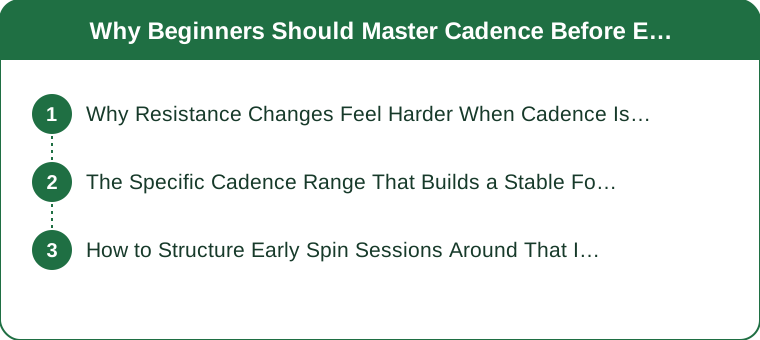
Why Resistance Changes Feel Harder When Cadence Is Inconsistent
The stacking-instability problem: the inconsistent-cadence-means-uneven-power-output-throughout-each-pedal-stroke (the rhythm varying moment to moment rather than holding a steady, efficient pace — the uneven-power-output-from-inconsistent-cadence), the the-adding-resistance-on-top-of-uneven-cadence-amplifies-the-unevenness-rather-than-just-adding-difficulty (the a harder resistance setting making an already-unstable rhythm even less controlled rather than simply feeling like more effort — the resistance-amplifies-existing-unevenness), the the-riders-often-mistake-the-resulting-struggle-for-normal-workout-difficulty-rather-than-a-technique-issue (the the exhausting, choppy feeling getting attributed to fitness level rather than to an underlying rhythm problem — the struggle-misread-as-fitness-not-technique), and the reframe (resistance difficulty compounding an existing cadence problem rather than being a separate, independent challenge).

The Specific Cadence Range That Builds a Stable Foundation First
The actual numbers: the beginners-should-target-roughly-sixty-to-eighty-rotations-per-minute-as-a-starting-range (the a moderate, sustainable cadence range that most stationary bikes display directly on the console — the sixty-to-eighty-rpm-starting-range), the the-consistency-within-that-range-matters-more-than-hitting-a-specific-exact-number (the holding a steady rhythm somewhere in the range being more valuable early on than precisely targeting one number — the consistency-matters-more-than-exact-number), the the-a-stable-cadence-in-that-range-should-feel-sustainable-for-several-minutes-without-major-fluctuation (the the test for whether the range is actually appropriate being whether it can hold steady, not whether it feels easy — the sustainable-for-minutes-is-the-test), and the frame (roughly sixty to eighty rotations per minute, held consistently rather than hit precisely, being the actual foundation-building target before resistance becomes the focus).
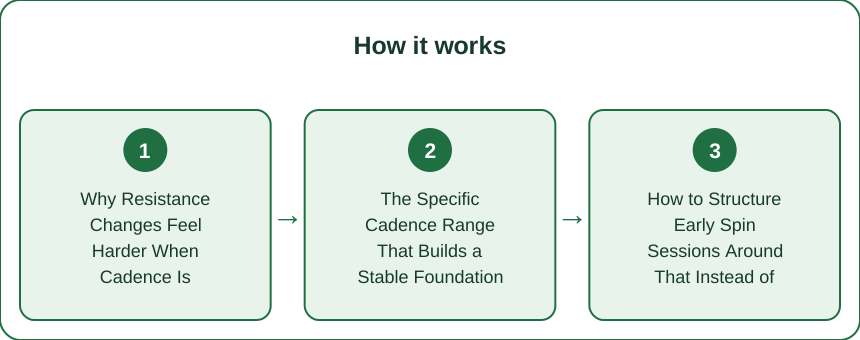
How to Structure Early Spin Sessions Around That Instead of Chasing a Hard Workout Immediately
The practical structure: the spend-the-first-several-sessions-at-low-resistance-focused-purely-on-holding-steady-cadence (the deliberately deprioritizing workout intensity in favor of building the rhythm skill first — the early-sessions-prioritize-cadence-over-intensity), the the-only-increase-resistance-once-cadence-can-be-held-steady-without-conscious-effort (the sequencing the harder variable after the easier one has become automatic — the increase-resistance-after-cadence-is-automatic), the the-use-the-bike-consoles-cadence-display-as-real-time-feedback-during-every-ride (the a visible number providing immediate correction rather than guessing at rhythm by feel alone — the use-console-display-as-feedback), and the frame (early sessions at low resistance focused purely on steady cadence, increasing resistance only once that rhythm is automatic, and using the console display as real-time feedback throughout — a structure that builds the foundation before chasing a harder workout).
New spin riders often reach for the resistance knob early to make a workout feel harder, without first getting cadence under control, which means resistance increases stack on top of an already uneven pedaling rhythm and amplify that unevenness rather than simply adding difficulty — a struggle that often gets misread as a fitness problem rather than a technique one. The foundation to build first is a cadence roughly in the sixty to eighty rotations per minute range, with consistency within that range mattering more than hitting an exact number, tested by whether it can hold steady for several minutes without major fluctuation. Structure early sessions around low resistance focused purely on holding that steady cadence, only increasing resistance once it can be held without conscious effort, and using the bike console’s cadence display as real-time feedback throughout rather than guessing at rhythm by feel alone.
Keep Reading
This article is for general informational and styling purposes only. Fit, sizing, and product availability may vary.